Free shipping to Spain on orders over €100
Spain: Free shipping on orders over €100 | Europe: Free shipping on orders over €150


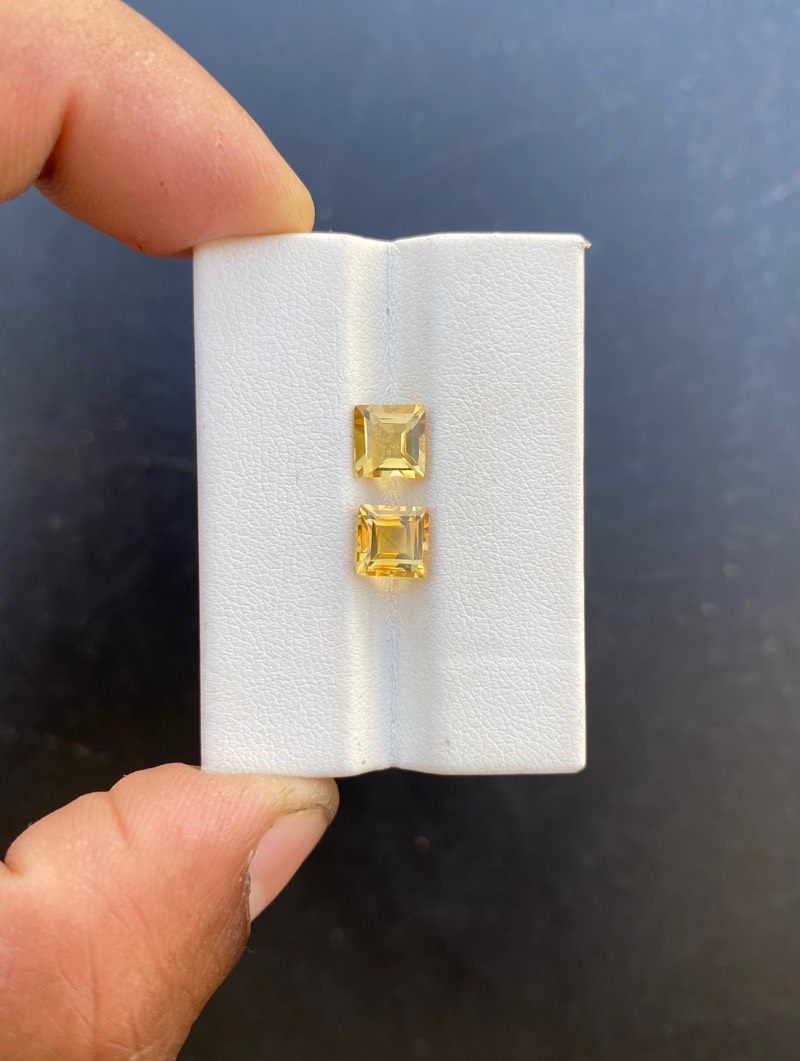


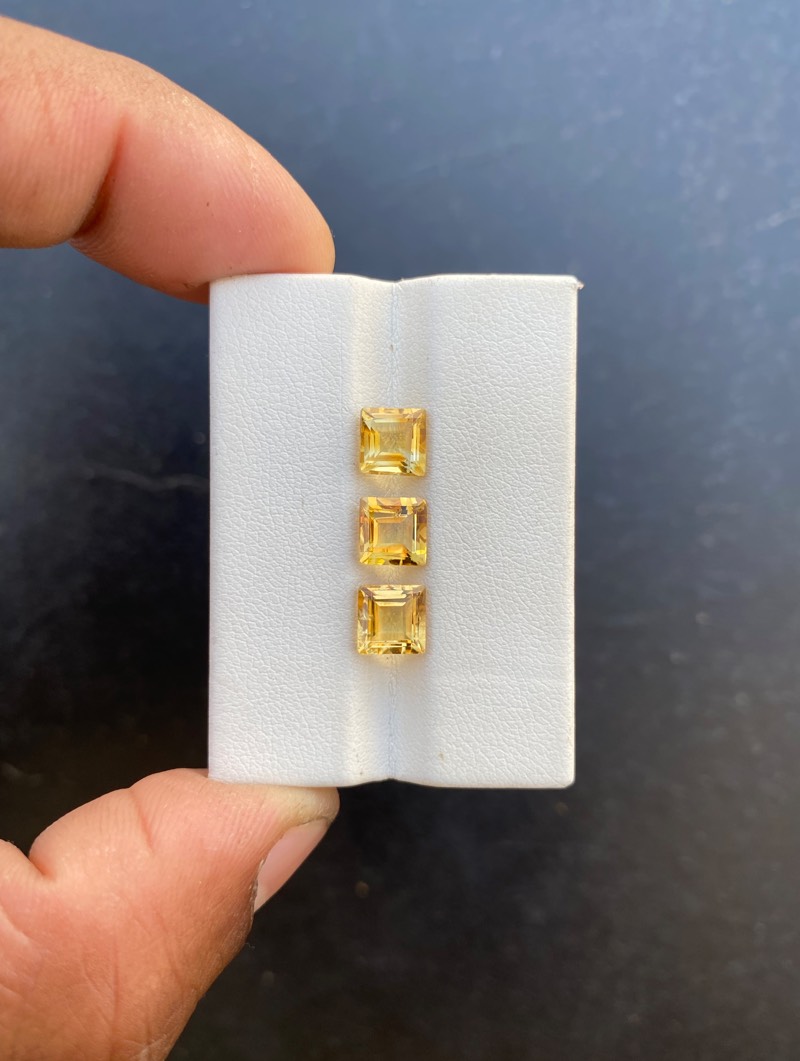


For many years Citrine has been a very popular stone on the market, but how much of this citrine is actually natural?
It’s actually a fairly scarce mineral, which is why natural citrine isn’t easy to find. I have a few pieces in my own collection. I’ve obtained some of them while working with Ametrine, since when cutting it I’ve come across pieces that lack amethyst color. I’m not making these available for now, since they’re something very exclusive. I also have a 2,380 g quartz point, which I use for my high-precision cutting work.
It has a hardness of 6.5–7 on the Mohs scale, and it’s worth noting that all citrine found in nature was at some point amethyst, since the color change occurs through a natural geothermal process.

This Citrine shown in the image is a natural piece from my own collection. It was mined around 15 years ago in Minas Gerais.
To know whether a stone is treated or is an imitation, the first thing we need to know is what kinds of fakes and treatments exist on the market.
These are all the variations we can find of Citrine:
SYNTHETIC CITRINE: since citrine is a quartz, it’s also a material that can be lab-created. Although it’s not very common to see on the market, there are also some companies that specialize in synthetically creating this mineral.
GLASS: there are many qualities of glass on the market sold as citrine. In my view, this is the most common imitation you’ll come across, since I’m honestly tired of seeing it in practically every shop window. The refractive index is different, and the shine and luster also vary, which can be a telltale sign and a way to identify at a glance whether you’re dealing with natural quartz or simply glass.
Obviously, judging it this way requires a trained, experienced eye.
HEATED AMETHYST: although I could include this information in the next section (treatments), I think it fits better here under imitations, since despite being a natural stone, it’s still essentially an imitation of citrine created through the heat treatment of amethyst.
DYEING: on some occasions we can find citrine quartz that’s been dyed to enhance its color. This treatment fades over time, so at some point it can be detected. It’s more common to find heated amethyst that’s been turned into citrine and then dyed to enhance its color. We also find rock crystal quartz dyed yellow. As I explained before, on other occasions the dye is more intense in the stone’s fissures, since these areas have lower density, which causes the color to build up more.
In the highest qualities used for cutting, we can also find natural citrine or heated amethyst dyed around the stone’s pavilion to change its appearance and color intensity.
Citrine originates mainly through two geological processes:
MAGMATIC PROCESS: this process occurs as lava cools underground. Silicon and oxygen atoms organize themselves into crystalline structures as the magma cools.
HYDROTHERMAL PROCESS: this is another common way quartz forms. Through silica-rich aqueous solutions that seep into existing rocks through fissures and cracks, quartz crystals form slowly as these particles are deposited.
This mineral forms in exactly the same way as rock crystal quartz, of course, but it needs the added presence of iron molecules in its composition for amethyst to form in the first place. From there, after a series of natural geothermal processes, it turns into what we know as Citrine, through a chemical reaction that changes the oxidation state of the iron present.
Although Brazil is the main exporter and the country where we find the largest accumulation of this mineral, it can also be found in many other countries.
For mining to be viable, there needs to be enough accumulation and quality of the material for it to be profitable. That’s why, even though a wide variety of minerals can be found in almost every country, not all of them turn to mining and exporting them.
These are the main countries where Citrine is found:
Brazil, Congo, and Madagascar.

Citrine has been used for thousands of years in jewelry-making. Both the Egyptians and the Romans, as well as other cultures, have always used it to generate abundance and success.
This mineral has enough hardness to be used in any type of jewelry. Citrine set in gold is a true showstopper.
I’ll start with the price of heated amethyst, since that’s essentially the only thing you’ll find on the market. The lower-quality pieces, as with almost all minerals, are completely opaque.
The more opaque pieces, smaller than 1 cm, run around €5 per kilo on the market. Larger pieces, between 5 cm and 15 cm, carry a somewhat higher price. The finest qualities can run from €300 per kilo to €2,500 per kilo, depending on size. Obviously, between these two extremes we can find hundreds of qualities, as happens with any other mineral.
A few years ago, price didn’t vary depending on size, but today it’s a factor to take into account.
As with all stones, we can find this material ranging from completely opaque qualities to completely transparent ones, like water.
A stone, in itself, is a chemical composition. The purer that composition is, the better structured the mineral’s atoms will be, resulting in a fully crystalline material.
It’s worth noting that, although many people don’t know how to tell qualities apart, the highest qualities, besides being the scarcest, are also the most beautiful to the human eye because of their flawlessness.
On top of that, more time and care is put into working a higher-quality crystal, so we’ll always find higher-quality materials that have been worked more skillfully.


