Free shipping to Spain on orders over €100
Spain: Free shipping on orders over €100 | Europe: Free shipping on orders over €150


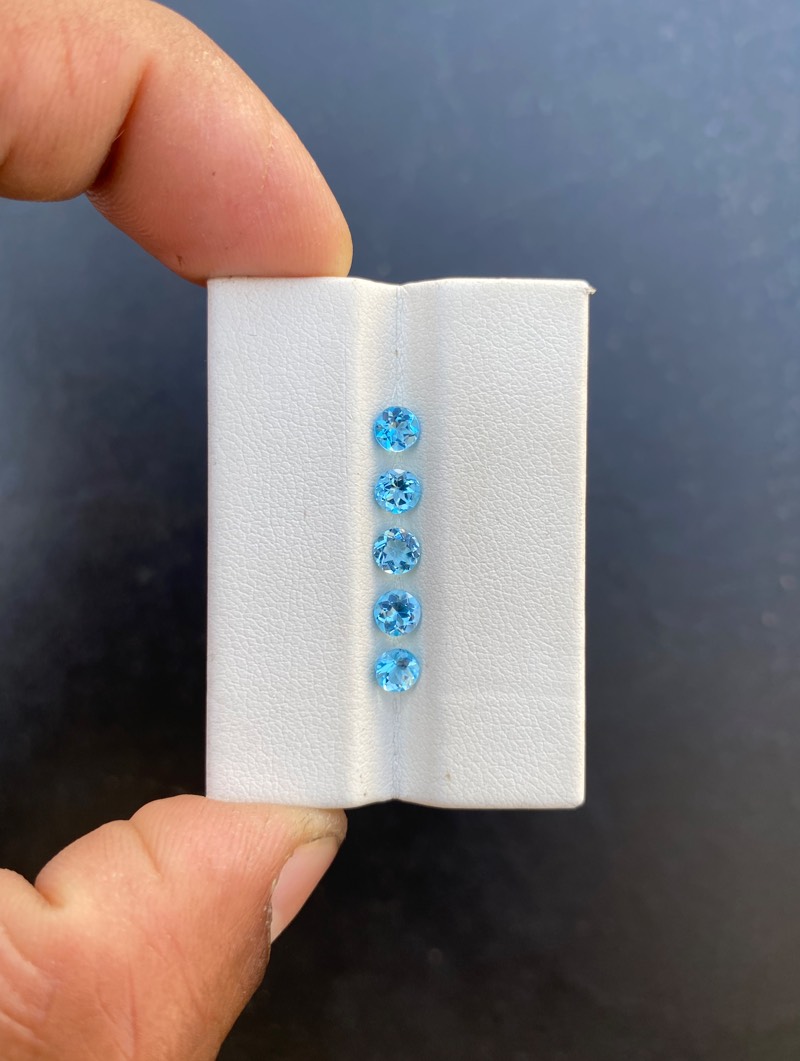

On this occasion we are going to talk about Topaz, one of the classic gems in jewelry that, despite its long history, continues to generate many doubts even among sector professionals. The main reason is that historically many commercial confusions have circulated under the name “topaz,” especially with yellow quartzes or citrines that for centuries were sold under this name.
For this reason, knowing its gemological properties well is essential for jewelers and professional buyers. If you want to see available specimens, you can consult the category for purchasing natural topaz in our store.

Topaz has historically been one of the most prized gems in jewelry, especially in yellow, golden, and pink colors. For centuries it was confused with other minerals of similar appearance, particularly with citrine quartz. In fact, many historically identified gems as topazes later turned out to be quartzes.
One of the best-known examples is the large “Braganza Topaz” from the Portuguese crown, which for a long time was believed to be topaz when it was actually colorless quartz.
In the contemporary market, topaz stands out for its wide range of colors. Although natural material can present itself in colorless, yellow, blue, pink, orange, or brown, much of the blue topaz currently commercialized has been treated to intensify the color. Even so, natural topaz of intense color, especially the so-called “Imperial,” continues to be one of the most valued varieties within the sector.
In modern jewelry, topaz is also valued for its ability to be presented in large sizes with good transparency, something that is not always possible in other gems.
Topaz is an aluminum silicate with fluorine and, occasionally, hydroxyl, whose chemical formula is Al₂SiO₄(F,OH)₂. It crystallizes in the orthorhombic system and presents well-formed prismatic crystals in many deposits.
One of its most outstanding characteristics is its hardness, which reaches 8 on the Mohs scale. This places it above quartz and makes it a relatively scratch-resistant gem. However, it presents perfect basal cleavage, which means it can fracture relatively easily if struck in the right direction.
The refractive index usually falls approximately between 1.609 and 1.643, with notable birefringence. Its luster is vitreous and can show excellent transparency in gem-quality material.
As for color, natural topaz appears in colorless, yellow, brown, blue, pink, and orange tones. The color is usually related to structural defects or impurities present during crystal formation.
At first glance, some features that help recognize topaz include its intense luster, high transparency, and the occasional presence of parallel growth lines visible under magnification.

Topaz is found in different parts of the world, mainly in deposits associated with granitic rocks and pegmatites. It can also appear in alluvial deposits where crystals have been transported from their original rock.
Brazil is historically the most important producer of gem-quality topaz, especially in the Minas Gerais region, known for producing the famous Imperial topaz. This material is distinguished by its orange, golden, or pink tones and is one of the most valued in jewelry.
Other producing countries include Pakistan, Russia, Sri Lanka, Nigeria, Madagascar, and Mexico. Each region may present slight differences in tonality and crystal quality.
For example, certain Pakistani deposits produce very transparent crystals suitable for large cuts, while some Brazilian areas stand out for more saturated colors.
Topaz has been a frequent subject of treatments to modify or intensify its color. One of the best-known cases is treated blue topaz, obtained from colorless material through irradiation and subsequent heat treatment. This procedure allows the production of intense blue tonalities that are very popular in the market.
There are different commercial denominations for these materials, such as Sky Blue, Swiss Blue, or London Blue, which differ mainly in color intensity.
As for imitations, topaz can be replaced in the market by quartz, glass, or synthetic materials with similar appearance. Quartz is probably the most frequent confusion due to its abundance and visual similarity in some colors.
To differentiate them, gemologists usually resort to tests such as refractive index measurement, specific gravity, and observation of internal inclusions.
In professional commerce it is fundamental to always specify whether the topaz color is natural or the result of treatment, as this directly influences its valuation.
Topaz forms mainly in geological environments rich in fluorine, associated with late magmatic processes. It is common to find it in cavities of granitic pegmatites or in hydrothermal veins where fluorine-rich fluids favor its crystallization.
During magma cooling, certain volatile elements allow well-formed crystals to develop in cavities where available space facilitates the characteristic prismatic growth of topaz.
Over time, erosion of host rocks can liberate these crystals, which subsequently concentrate in secondary or alluvial deposits.
In jewelry, topaz is an extremely versatile gem. Its good transparency allows faceted cuts that highlight brilliance and light dispersion. Oval, emerald, pear, or cushion cuts are especially common.
It is also a gem that adapts well to medium and large-sized pieces, as crystals are usually found in relatively important dimensions.
Topaz is used in rings, earrings, pendants, and bracelets. However, due to its perfect cleavage, it is advisable to use settings that protect the gem well, especially in jewelry that may receive frequent impacts.
Warm tones combine well with yellow or rose gold, while blue varieties are usually set in white gold or platinum to enhance their color contrast.
The value of topaz depends mainly on four factors: color, purity, size, and provenance.
Color is the most determining factor. Natural intense tonalities, especially in the Imperial variety, usually have significantly higher valuation than more common materials.
Transparency also plays an important role. High-quality topaz usually presents very few visible inclusions, allowing for clean cuts with great brilliance.
Size is another point in favor of this gem, as it can be found in relatively large crystals. However, an increase in size does not always imply greater value if the color is not attractive.
Finally, origin can also influence market perception, especially when it comes to material from recognized deposits.
To correctly evaluate topaz in professional jewelry, it is advisable to consider several factors. The first is the quality of the color, observing both saturation and uniformity.
The second is transparency and the presence of visible inclusions. Although topaz is usually quite clean, some natural inclusions can appear and affect the overall appearance.
Cut quality is also key, as it directly influences brilliance and the way light is reflected within the gem.
Finally, it is important to determine whether the stone has received treatments. This information is essential for correct valuation within the gemological market.
To deepen these analysis criteria, you can consult the general gemology article at https://samsaragemstones.com/informacion-gemologica/que-es-la-gemologia-2/
Topaz is a gem with a long tradition in jewelry and a solid presence in today’s market. Its combination of hardness, transparency, and color variety makes it a very interesting material for both classic jewelry and contemporary design.
However, it is also a gem that requires technical knowledge to avoid confusion with other minerals and to correctly understand the impact of treatments on its value.
Working with well-identified topaz and certified quality guarantees not only a better jewelry piece, but also more accurate valuation within the professional market.
If you are looking for topaz for your designs or to expand your gemological collection, always opt for natural specimens, correctly identified and with clear information about their origin and possible treatments. Choosing certified quality gems is the basis for creating durable jewelry with true gemological value.


